
Most AI image enhancers are skilled using large datasets of snap shots. During education, the machine learns what clean pics generally appear to be and the way they range from low-best ones.
It doesn’t “remember” specific images. Instead, it learns patterns. Edges. Textures. Common shapes. Lighting behavior.
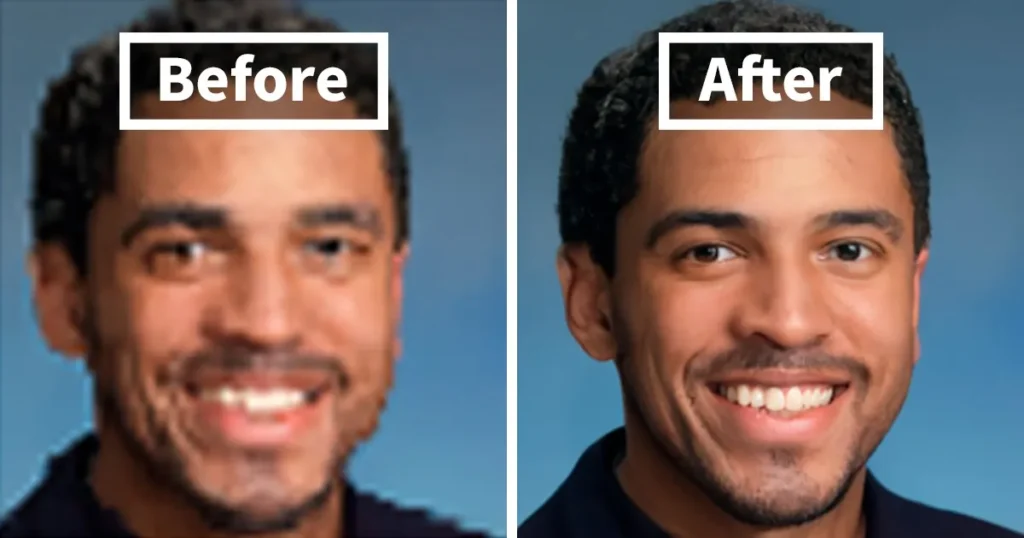
When you upload an image, the AI looks for areas that seem weak or unclear. It then predicts what those areas should look like based on what it has learned. That word matters. Predicts.
This is why results can vary. The AI isn’t restoring lost data. It’s making an educated guess.
There’s also a difference between image upscaling and image enhancement. Upscaling focuses on increasing resolution. Enhancement focuses on clarity and balance. Many tools try to do both at the same time.
If you’ve ever enlarged a small image and noticed it looks sharper but slightly artificial, that’s the AI filling in gaps rather than recovering original detail.
Common Use Cases for AI Image Enhancers
AI image enhancers tend to show their value in everyday situations.
Fixing blurry photos
Photos taken quickly or in poor lighting often lose sharpness. AI tools can help reduce mild blur and improve overall clarity. They struggle with heavy blur, but small improvements are common.
Upscaling images
Low-resolution images don’t scale well. AI image enhancement tools can increase image size while keeping edges cleaner than traditional resizing.
Old photo restoration
Older photos often fade or lose contrast. AI enhancement can bring back some clarity without heavy manual work. Results depend a lot on the original image.
Ecommerce product images
Clean visuals matter in online stores. Many sellers use AI tools to refine product photos instead of reshooting everything.
Social media visuals
Sharper images tend to perform better. AI enhancement can help images stand out without heavy editing.
Most people start with one use case, then experiment with others once they see what the tools can do.
Key Features to Look for in an AI Image Enhancer
Not all AI image enhancers behave the same way.
Ease of use
A good tool should feel straightforward. Uploading an image and getting results shouldn’t take effort. This sounds obvious, but many tools make simple tasks harder than necessary.
Output quality
Look closely at details. Faces, edges, and textures are where problems show up first. Overprocessing is common.
Speed
Some tools are fast but basic. Others are slower and more detailed. Which one matters depends on how often you plan to use it.
Supported formats
If you work with different file types, this matters more than most people expect.
Free vs paid limits
Free versions often restrict resolution or downloads. Paid versions remove these limits, but not always dramatically.
Most users overlook how much free limits affect real workflows until they hit them.
Free vs Paid AI Image Enhancers
Free AI picture enhancer tools may be useful for testing and coffee use. They’re regularly enough for personal images or quick fixes.
The alternate-off generally is available in resolution, speed, or output consistency. Free tools may additionally add watermarks or restriction commercial use.
Paid gear normally provide higher-quality output and fewer limits. They’re better proper for ordinary use or expert paintings.
For many people, starting with a free option makes sense. Paying becomes worthwhile once the limitations start getting in the way.
Limitations of AI Image Enhancers
AI image enhancers are helpful, but they are not reliable in every situation.
One common issue is over-sharpening. Images may look clean at first glance, then artificial once you look closer. Skin textures are a common problem.
Another limitation is extreme image damage. If an image is very blurry or extremely low resolution, the AI has little to work with. Improvements may be minimal.
There’s also the issue of invented detail. Because the AI predicts missing information, it can introduce elements that weren’t there originally. This matters for accuracy-sensitive work.
These tools work best when expectations are realistic.
How to Choose the Right AI Image Enhancer
Choosing the right AI image enhancer depends on what you need.
Based on your goal
- General improvement: look for balanced enhancement
- Larger images: focus on upscaling quality
Based on image type
- Faces require careful handling
- Product images benefit from clean edges
- Old photos need subtle processing
Based on budget
- Free tools for occasional use
- Paid tools for consistency and control
Testing a few options is usually more useful than reading feature lists.
Are AI Image Enhancers Safe to Use?
Most AI image enhancers require uploading images to a server. That naturally raises privacy questions.
Before using a tool, it’s worth checking how images are handled. Some tools delete uploads automatically. Others store them longer.
For sensitive images, choosing tools with clear privacy policies is a safer approach. There’s no need to be alarmed, but awareness helps.
Frequently Asked Questions About AI Image Enhancers
Do AI image enhancers actually work?
They often improve clarity, especially for mild quality issues.
Can AI fix very blurry photos?
Only to a limited extent. Severe blur remains difficult.
Are AI image enhancers free?
Many offer free versions with restrictions.
Do they reduce image quality?
Poor settings can cause issues. Subtle adjustments work better.
Are these tools suitable for professional use?
Many professionals use them, but results should always be reviewed.
Final Thoughts
An AI image enhancer is fine considered as a supporting device. It can enhance photograph best, keep time, and simplify certain responsibilities. It can’t update precise supply pics or careful judgment.
The maximum regular consequences come from experimenting together with your own snap shots and adjusting expectancies along the manner. Used thoughtfully, AI image enhancement turns into a realistic part of modern-day picture workflows in place of a shortcut that disappoints.